Festive Season Marketing for D2C Brands: How to Grow Sales Without Burning Margins in 2026
Shivam J
Oct 19, 2026 · 9 min read
The usual festive season marketing playbook for D2C brands goes like this: spend more, discount harder, ship everything. The first week of 2026 sales suggests that playbook now costs money. Orders rose 31% compared with the opening week of last year's sales, but gross merchandise value grew just 17%, and average order value fell 10% (Unicommerce via Business Standard, 2026).
More orders. Smaller baskets. The same shipping bill.
Diwali is on Sunday, 8 November, so you have roughly three weeks of peak demand left. Selling isn't the hard part this year. Keeping a margin on each order is, once discounts, returns and pricier ads have each taken their cut. Below are the five places that margin leaks, with the numbers behind each one.
Key Takeaways
First-week orders are up 31%, but average order value is down 10% (Unicommerce, 2026).
Returns can erase a festive order's margin faster than ad costs.
Shallow, trust-led offers beat deep discounts.
Quick commerce suits low-ticket gift packs.
Keep budget in reserve for Dhanteras week.
Bigger, and harder to make money in. Google and Redseer project festive e-commerce GMV of $15-16 billion in 2026, up from about $13 billion last year (Google and Redseer via BestMediaInfo, 2026). The catch is where that growth comes from: smaller, more frequent orders, many of them from smaller towns and first-time buyers.
The first two days alone brought in about ₹24,000 crore, around six times a normal day. Redseer estimates that Tier 2 and rural shoppers made up nearly two-thirds of buyers in that window, and that first-time shoppers doubled (Redseer via Storyboard18, 2026). Unicommerce's order data tells the same story from the other side: Tier 3 towns placed 42% of all e-commerce orders in week one (Unicommerce via Business Standard, 2026).
Which categories carry the season? Grocery and beauty, by a distance. Redseer expects grocery to grow 48-50% and beauty and personal care 35-40% this season, against 20-22% for fashion (Redseer via The Week, 2026). Sell skincare or snacks, and demand is pulling you along. Sell kurtas, and you're growing more slowly while paying the same festive ad rates as everyone else.
Because revenue per order is falling and the cost of fulfilling it isn't. First-week orders are up 31%, but average order value is down 10% against last year's opening week (Unicommerce via Business Standard, 2026). On top of that, agencies saw regional ad CPMs climb 15-30% during the 2025 festive peak (exchange4media, 2025).
Think about what a smaller basket actually changes. Shipping, packaging, payment fees and pick-and-pack cost roughly the same on a ₹900 order as on a ₹1,000 one. The missing ₹100 comes straight out of contribution margin. Nothing else in the order gets cheaper to make up for it.
A word of caution on ad costs. Nobody publishes audited festive CPMs for India, so the 15-30% figure reflects what agencies are seeing, not a benchmark. One agency head put vernacular digital CPMs in Tier 2 and 3 cities up 25-30% year on year. Treat that as a direction rather than a budget input, though the direction itself is clear enough. Your cheapest festive customer is usually someone who has bought from you before.
Get more cash-on-delivery (COD) buyers to prepay, and screen risky orders before they ship. Return-to-origin (RTO) rates hit 39.2% at the November 2025 festive peak, and 58% of COD orders came back during the festive quarter (Unicommerce D2C Report, 2026). Brands that fixed their operations got RTO down to 21% by March.
Why does RTO spike every Diwali? Because two things happen at once, and they make each other worse. Festive demand pulls in first-time, low-intent buyers who tend to pick COD, and couriers slow down under peak volume. Each extra day in transit gives the buyer one more day to change their mind before the parcel reaches the door.
The interesting part is what the brands that got to 21% didn't do: they didn't switch couriers. According to Unicommerce, a logistics software provider whose data covers 6,000+ D2C brands (worth reading with that in mind), they made three operational changes:
A prepaid incentive at checkout, which converts 20-30% of COD intenders.
Courier routing by pin code, based on actual delivery performance.
Address verification before dispatch.
Here's what that gap looks like on one ₹1,500 order sold at 30% off. The costs are illustrative, not taken from any single brand, so swap in your own.
Per delivered order At 39% RTO At 21% RTO Selling price after 30% discount ₹1,050 ₹1,050 Product cost ₹300 ₹300 Shipping and packing ₹90 ₹90 Payment fee (2%) ₹21 ₹21 Customer acquisition cost (₹350 per shipped order ÷ delivery rate) ₹574 ₹443 Two-way shipping on returns (₹180 each) ₹115 ₹48 Contribution -₹50 ₹148
Assumptions: returned stock is resaleable, and the 2% payment fee is applied to every order for simplicity.
Same product. Same ad spend. A ₹198 difference per delivered order, and the only thing that changed is how many parcels came back. That's why RTO is the first number worth fixing before Diwali week.
Shallower than habit says. Average festive discounts on fashion marketplaces fell from 44% in 2024 to 34% in 2025, according to Fynd's study of 60+ brands (Fynd via Social Samosa, 2025). Shoppers seem fine with that: 27% rank brand trust as their top reason to buy, ahead of discounts at 22% (InMobi and Glance via Social Samosa, 2026).
Run the same table at 20% off instead of 30%. The selling price goes up to ₹1,200, and contribution at 21% RTO roughly doubles to about ₹295. That's what ten discount points are worth once returns are under control.
So what replaces the deeper cut? Things that add value without resetting your price: gift bundles, a free mini above a cart threshold, or a prepaid-only offer. The prepaid-only offer is the one worth testing first, because it does two jobs at once, lifting conversion while pulling RTO down.
Yes, for low-ticket gifting and impulse products, and probably not for your hero range. Google and Redseer project quick commerce will rise from about 11% of festive e-commerce GMV in 2025 to about 18% in 2026 (Google and Redseer via BestMediaInfo, 2026). In the first sale week, quick commerce orders grew 85%, against 27% for brand websites (Unicommerce via Business Standard, 2026).
The pull is conversion. LS Digital's analysis of 1.5 million festive orders found quick commerce converted three to five times better than marketplaces for items under ₹500 (LS Digital via Storyboard18, 2025). Shoppers skip the comparison step entirely. So where's the catch? Cost. Redseer estimates fulfilment alone takes 23-27% of a typical ₹460 quick commerce order, before platform margins and ad fees. Gift packs, mini sizes and festive bundles fit those numbers, while full-price hero products usually don't.
Mostly late. InMobi and Glance found that 62% of Indian shoppers buy within the final month before a festival, and 29% buy a week or less before (InMobi and Glance via Social Samosa, 2026). With Dhanteras on 6 November and Diwali on 8 November, the last fortnight should get the biggest share of your budget.
It's tempting to go all in on the opening sale days, because that's when the platforms make the most noise. But brands that spend everything early have nothing left for Dhanteras week, when gifting intent peaks and late buyers finally commit. Keep a reserve for late October and early November, and swap out tired creatives before that window opens, not halfway through it.
Search does a lot of the closing. Seven in ten festive shoppers who spot a product on social media check it on Google, and 90% treat sub-two-day delivery as non-negotiable (Google-commissioned Ipsos study via Google India, 2026). Try it yourself: search your brand name on your phone. Do you see reviews, current prices and a clear Diwali delivery cut-off?
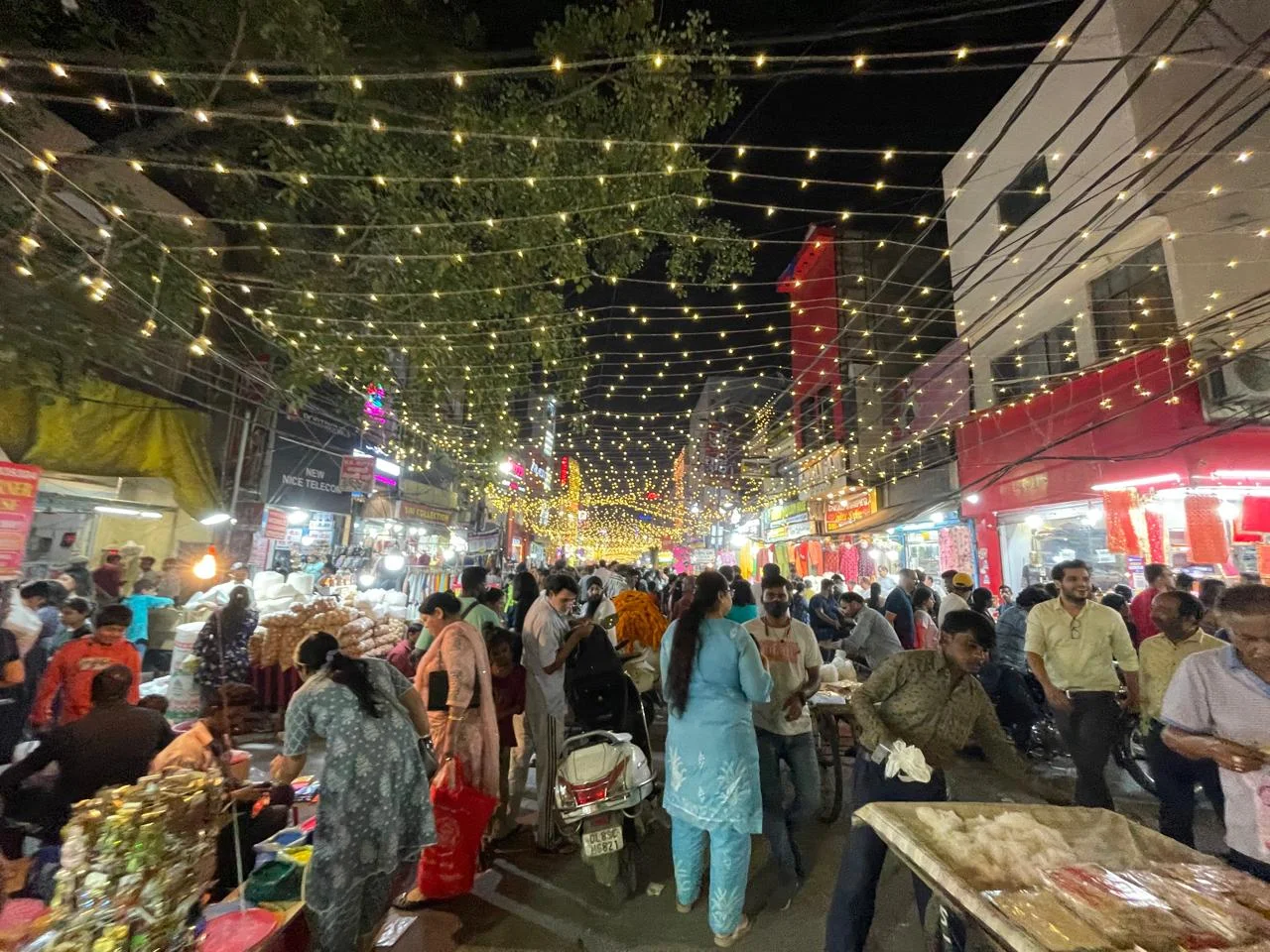
The festive season really pays off in the 90 days after Diwali. GoKwik data showed brand-website orders up 46.8% in festive 2025, with repeat purchase rates 20-23% higher in fashion, baby care and beauty (exchange4media, 2025). With first-time shoppers doubling in this year's opening days, follow-up is where acquisition costs get earned back.
Should you pull buyers to your own site, or stay where the traffic is? Brands split on this. Littlebox, a fully D2C fashion label, put its entire 2025 festive budget into its own site and app, across performance ads, creator content and WhatsApp follow-ups. It reported 3.4x ROAS on 35% higher spend. Pilgrim went the other way, sending 70% of a 50% larger budget to marketplaces and using its own site for storytelling and retention (exchange4media, 2025). Either approach only works if someone owns the follow-up.
It helps to think of festive customer acquisition cost as a loan rather than an expense. A buyer acquired at ₹443 per delivered order rarely pays that back on one discounted purchase. The second order, at full price with no ad cost attached, is where the money is.
In practice, segment festive buyers by what they bought and send a refill or "complete the set" message within 30 days. Offer free shipping rather than another discount. Then watch one number: how many festive customers come back within 90 days without a coupon. If that number is low, the season was bought, not earned.
Aim for under 25%. RTO peaked at 39.2% in November 2025, while brands that added prepaid incentives, pin-code routing and address checks reached 21% by March 2026 (Unicommerce, 2026). Check your COD share every day during the sale, because it climbs before returns show up in your numbers.
No. InMobi and Glance found that 29% of shoppers buy a week or less before a festival (InMobi and Glance via Social Samosa, 2026). With Diwali on 8 November, there's still time to fix checkout, add a prepaid offer and hold budget back for Dhanteras week.
Yes, for reach, while keeping your own site for margin. Marketplace orders grew 26% in the first 2026 sale week, close to brand websites at 27% (Unicommerce via Business Standard, 2026). Win discovery on the marketplace, then give repeat buyers a reason to order from you directly next time.
Festive season marketing for D2C brands in 2026 comes down to an unglamorous truth: margin is decided in operations and timing more than in creative. If you only have time for three things before Diwali, do them in this order. Fix RTO, because a returned parcel costs you twice. Trim discount depth and fill the gap with bundles and prepaid offers. Then protect a slice of budget for Dhanteras week.
Quick commerce listings and a 90-day follow-up plan can start next week.
For today, pick one task: compare your COD share with last month's, and add a prepaid incentive at checkout.
A data engineer and marketing analytics builder, 13+ years in. Co-founder FollowTheSpend, where we rebuild marketing data infrastructure for companies that have outgrown gut-feel and need numbers their top management will actually trust.
Experience the modern e-commerce tracking designed to save money.